
Why Introverts Struggle With Spoken English (And How to Fix It)
Introverts often understand English well but hesitate to speak. Learn why traditional methods fail introverted learners and what actually builds fluency for them.
Introverts are often excellent listeners and deep thinkers. They process language carefully and tend to have strong reading and writing skills in English. Yet many struggle significantly with spoken English — not because of ability, but because of environment.
The way most spoken English practice is structured is designed for extroverts. It rewards fast responses, tolerates social pressure, and treats speaking as a performance. For introverts, this is exactly backwards.
What Introversion Actually Means for Language Learning
Introversion isn't shyness or social anxiety, though the two can overlap. It's a cognitive style: introverts process information more deeply before responding, recharge through solitude, and find high-stimulation social environments draining.
For spoken language learning, this has specific implications:
- Introverts need more processing time before speaking — they're not slow, they're thorough
- They find public mistakes more costly — social exposure combined with error feels especially uncomfortable
- They do their best thinking privately — in group settings, faster speakers dominate before an introvert is ready
- They prefer depth over breadth — repeating one scenario until mastered rather than skimming many
None of these are weaknesses. But they're completely at odds with how most English classes are run.
Why Traditional Speaking Environments Fail Introverts
Classrooms and group discussion formats typically:
- Reward fast responses — extroverts who think out loud get more practice
- Penalize pauses — silence feels awkward and gets filled by others
- Create social pressure — everyone hears your mistakes in real time
- Move at a single pace — too fast for introverts who need repetition to feel ready
When an introvert is rushed to speak before they're ready, they freeze. The words are there — the brain just needs a moment more. But in a classroom, that moment isn't available.
The Hidden Cost of Forced Participation
Being pushed to speak before you're comfortable doesn't build confidence. It damages it.
Repeated experiences of freezing, being corrected in front of others, or struggling to keep up with faster speakers teach the brain an association:
Speaking English in public = risk of embarrassment.
Once that association forms, avoidance follows. Introverts stop volunteering to speak. They avoid situations where English is required. The gap between their comprehension and their speaking ability widens — not because they're not learning, but because they're not getting safe opportunities to output.
What Actually Works for Introverted Learners
Introverts thrive under specific conditions that are easy to create with the right tools:
Privacy
No audience. No one evaluating. No social consequences for mistakes. When introverts practice alone, they access the full depth of their English knowledge without interference from social anxiety.
Controlled pace
The ability to pause before responding, take time to think, and move forward when ready — not when a teacher or classmate expects you to.
Repetition without embarrassment
Running the same conversation multiple times until it feels natural — without anyone sighing, moving on, or noting your hesitation.
Gentle feedback
Improvement suggestions after the fact, not corrections mid-sentence that break your train of thought and increase anxiety.
How AI Practice Aligns With Introverted Learning
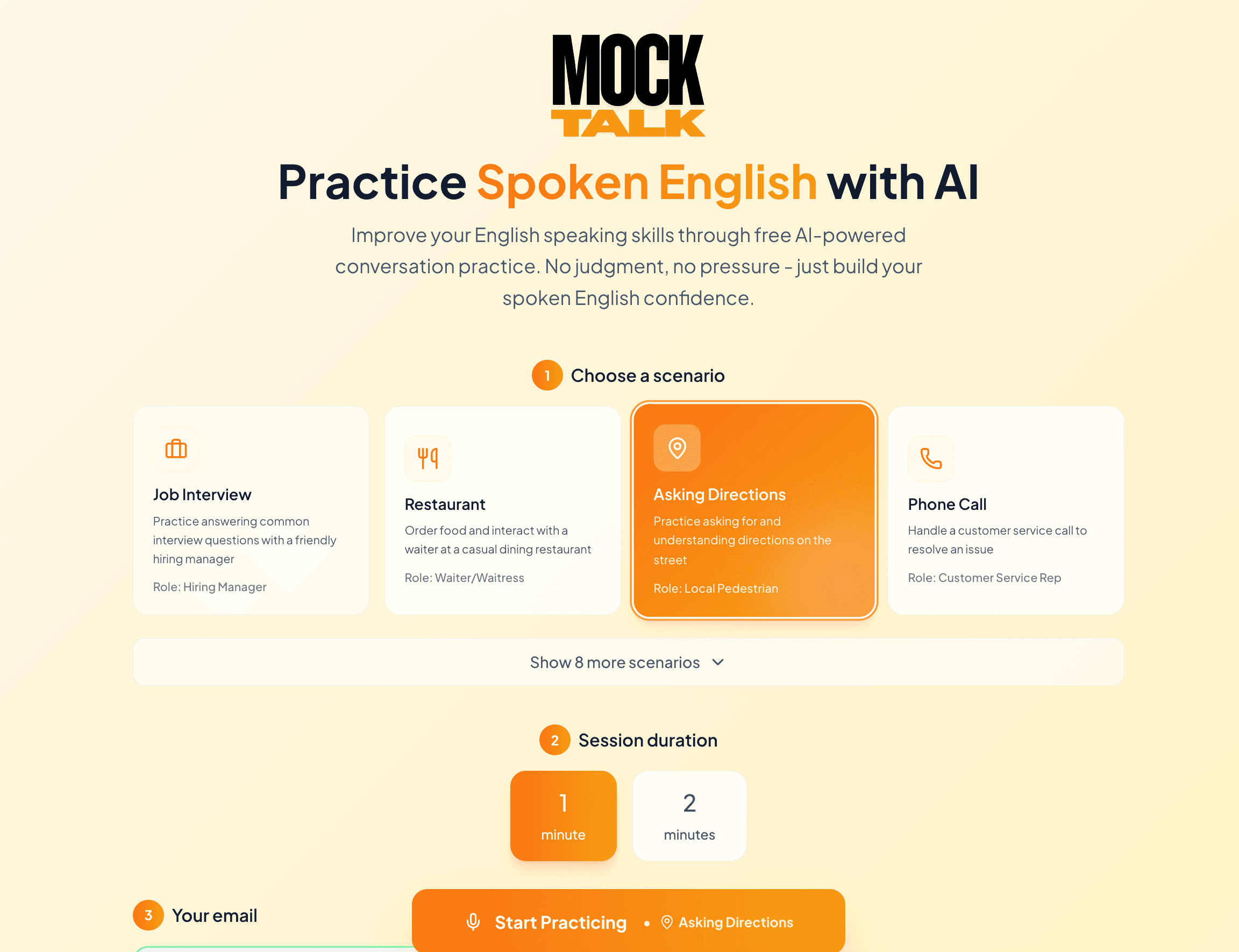
AI conversation tools give introverts exactly what they need:
- Pause before responding — the AI waits
- Restart conversations — run the same scenario as many times as needed
- No social audience — practice in total privacy
- No rushing — move at your own pace throughout the session
This aligns naturally with how introverts process and learn. Instead of fighting their cognitive style, they can work with it.
Good starting scenarios for introverted learners are those with clear structure and predictable patterns:
- Restaurant ordering — specific vocabulary, polite phrases, predictable flow
- Hotel check-in — structured exchange with a clear beginning and end
- Banking conversations — formal, professional, manageable scope
Once those feel comfortable, move to more open-ended scenarios like a job interview or a meeting introduction with a new colleague.
Speaking Confidence Comes Before Social Fluency
The goal isn't to turn introverts into extroverts. It's to give them a private space to build enough fluency that public speaking feels manageable — not comfortable necessarily, but manageable.
Once an introvert has practiced a job interview scenario 10 times privately, the real interview is familiar territory. The words come automatically. The nerves are still there, but they're not blocking recall.
Introverts don't need more pressure. They need better conditions.
Build your English confidence privately, at your own pace — free, no download needed.