The Ultimate Guide to AI-Powered Language Learning in 2026
How AI is transforming spoken English practice with personalized conversations, instant feedback, and judgment-free environments. Science-backed and practical.
Learning a new language has never been more accessible, yet many learners still struggle with one critical challenge: finding opportunities to practice speaking. Traditional methods like language classes and textbooks are great for grammar and vocabulary, but they often fall short when it comes to developing real conversational fluency.
"The key to language fluency isn't just knowing the words—it's being able to use them confidently in real conversations." — Dr. Stephen Krashen, Linguist
Enter artificial intelligence. AI-powered language learning tools are transforming how we practice speaking, offering personalized, judgment-free environments where learners can build confidence at their own pace.
Why Traditional Language Learning Falls Short
Before we dive into AI solutions, let's understand the problems with conventional approaches:
The Three Major Barriers
- Limited Practice Opportunities: Language classes meet 2-3 times per week, providing minimal speaking time
- Fear of Judgment: Many learners feel anxious speaking in front of others
- One-Size-Fits-All: Traditional curricula don't adapt to individual learning speeds or interests
| Learning Method | Accessibility | Personalization | Speaking Practice | Cost |
|---|---|---|---|---|
| Traditional Classes | Low (scheduled) | Low | Minimal | High ($$$) |
| Language Exchange | Medium | Medium | High | Free |
| Private Tutors | Low (scheduled) | High | High | Very High ($$$$) |
| AI Practice | High (24/7) | Very High | Unlimited | Low ($) |
As you can see, AI-powered tools offer a unique combination of benefits that traditional methods simply can't match.
How AI Language Learning Works
Modern AI language learning platforms use several technologies working together:
Natural Language Processing (NLP)
NLP allows AI to understand your spoken input, analyze grammar and vocabulary usage, detect pronunciation patterns, and generate contextually appropriate responses.
Speech Recognition
Advanced speech recognition transcribes your speech in real-time, identifies pronunciation patterns, measures fluency metrics like pace and hesitation, and provides instant feedback.
Adaptive Learning
AI systems learn from your interactions to identify weak areas, adjust difficulty automatically, and recommend personalized practice scenarios based on your progress.
The Science Behind Effective AI Language Practice
Research shows that certain principles make language learning more effective. Here's how AI implements these insights:
The Input Hypothesis
Theory: Learners acquire language best when exposed to input slightly above their current level.
AI Implementation: Adaptive algorithms automatically adjust conversation difficulty based on your performance, ensuring you're always challenged but not overwhelmed.
The Affective Filter Hypothesis
Theory: Anxiety and stress create a "filter" that blocks language acquisition.
AI Implementation: Practicing with AI eliminates social anxiety, creating a judgment-free environment where mistakes are part of the learning process.
Spaced Repetition
Theory: Information is better retained when review sessions are spaced over time.
AI Implementation: Repeating scenarios across multiple sessions reinforces vocabulary and sentence patterns at optimal intervals for memory retention.
Real-World Scenarios Where AI Practice Excels
The best language practice mirrors real-life situations. Here are the scenarios where AI gives you the most value:
Professional Scenarios
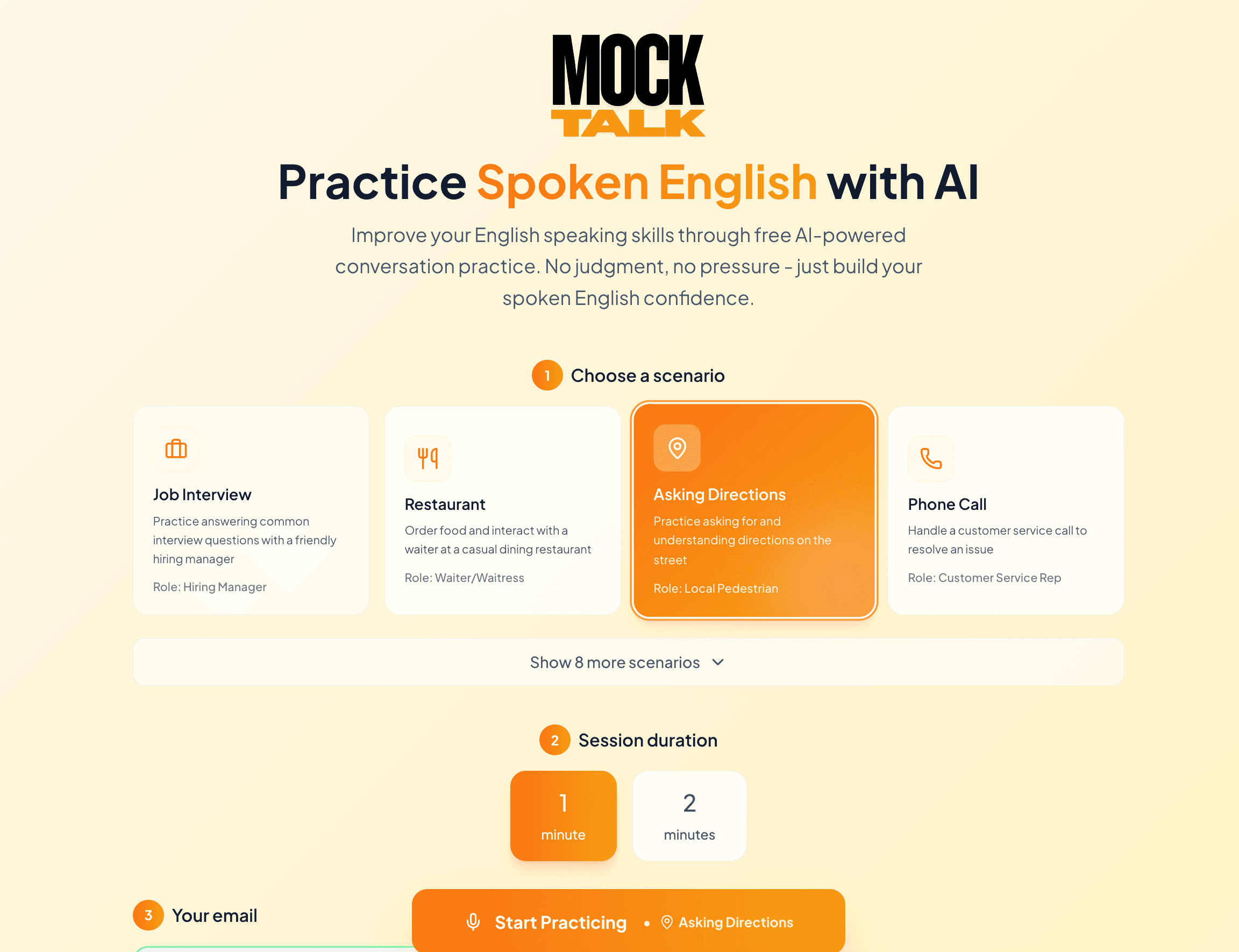
- Job interviews: Practice answering tough questions with a friendly AI hiring manager
- Meeting introductions: Rehearse how you introduce yourself to new colleagues
- Phone calls: Handle customer service calls without stress
Daily Life Scenarios
- Restaurant ordering: Master food vocabulary and polite requests
- Doctor's appointments: Discuss symptoms confidently in English
- Shopping interactions: Ask questions and navigate store conversations
Travel & Practical Scenarios
- Airport check-in: Navigate baggage, gates, and boarding in English
- Hotel check-in: Request rooms, amenities, and local recommendations
- Asking directions: Understand and respond to directions naturally
Best Practices for AI Language Learning
To maximize your results, follow these evidence-based strategies:
Practice Daily (Even If Brief)
Consistency beats intensity. Five minutes daily outperforms a 2-hour weekly session. Your brain needs repeated exposure to build new neural pathways for language production.
Embrace Mistakes
Every error is a learning opportunity. AI won't judge you — use that freedom to experiment with vocabulary and sentence structures you'd normally avoid in front of people.
Focus on Communication First
Perfection comes later. Initially, prioritize being understood over being grammatically perfect. Native speakers do this naturally — they communicate first, polish later.
Combine Methods
Use AI practice alongside other learning approaches:
- Watch movies/shows in English for exposure
- Read to build vocabulary
- Use AI to practice speaking
- Apply those skills in real conversations
Set Specific, Scenario-Based Goals
Instead of "improve English," aim for concrete targets:
- "Confidently order at a restaurant without hesitating"
- "Introduce myself clearly in a job interview"
- "Ask for directions and understand the answer"
Common Questions About AI Language Practice
Can AI really replace human teachers?
AI doesn't replace teachers — it complements them. Think of AI as unlimited practice time between lessons. Human teachers provide cultural context, emotional support, and nuanced feedback that AI can't match. But for pure speaking practice volume, AI wins.
Will I develop a robotic accent?
No. Modern AI uses natural speech patterns based on real human conversations. Consistent practice with AI can actually improve your accent by exposing you to clear, natural English speech.
Is it strange talking to a computer?
It feels unusual at first, but most users report feeling comfortable within a few sessions. The privacy and zero-judgment environment actually make it easier than practicing with people — especially for learners who feel self-conscious.
Getting Started: Your Action Plan
- Choose a scenario relevant to your life — start with one that makes you nervous in real life
- Practice for 3–5 minutes — that's genuinely all it takes to start
- Review the feedback — note one or two things to improve
- Repeat the same scenario — aim for 3–5 times over a week
- Move to the next scenario — once the first feels natural
Conclusion
AI-powered language learning gives you the confidence and skills to engage successfully in real English conversations. By providing unlimited, judgment-free practice opportunities, tools like MockTalk are helping learners worldwide build fluency they never thought possible.
The best time to start was yesterday. The second best time is right now.
Start practicing spoken English with AI — free, no download needed.